Agendas, report requests, provider uploads and board packs can be chased in separate trackers and inboxes.
Companion brings preparation, pack readiness, report status and annual-task context into the meeting record.


Solutions
Boardmate Companion supports recurring governance work: agendas, board packs, meetings, report requests, minutes, annual obligations, actions, approvals, reminders, and audit history.
Agenda planning, report requests, compliance status, pack readiness, and entity context set the source.
Meeting records, drafts, comments, chair decisions, and approvals stay attached to the cycle.
Approved minutes, actions, unresolved matters, reminders, and provider follow-up carry forward.
Before: Agenda planning, report requests, compliance status, pack readiness, and entity context set the source.
During: Meeting records, drafts, comments, chair decisions, and approvals stay attached to the cycle.
After: Approved minutes, actions, unresolved matters, reminders, and provider follow-up carry forward.
Team plan: Use Lite for the immediate backlog, then expand into Companion when the live cycle needs the same control.
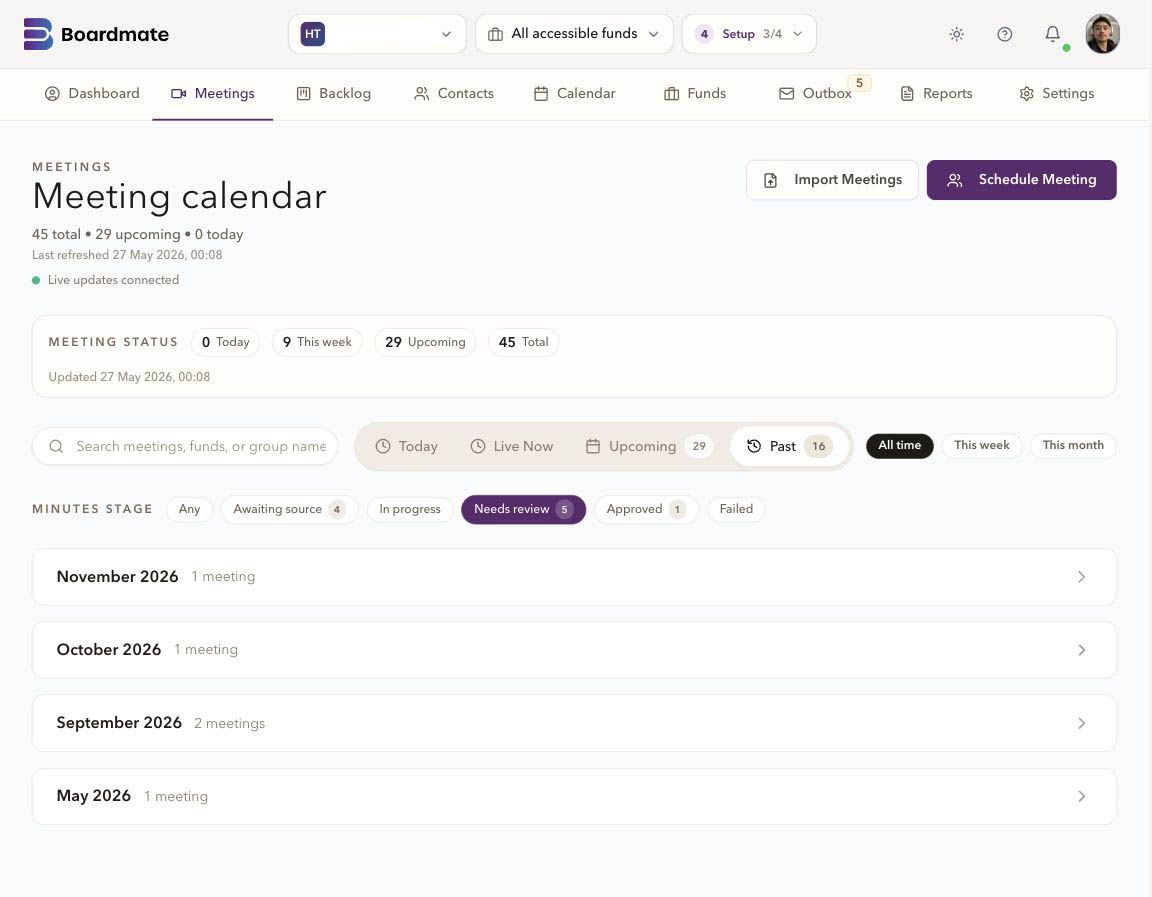
Use Companion to request the material, assemble a pack and prepare circulation for approval. Connect Zoom or Microsoft Teams for live meeting source material, then coordinate the minutes review and follow-up through the same meeting record.
Agenda planning, report requests, service provider uploads, annual task status, and board pack readiness shape the material available later.
Action carry-forward, compliance status, reminders, approvals, and governance memory help the next meeting begin with context.
For a CSP, Companion is also a client-service layer. When a director or investment manager asks where a fund stands, the team can point to meetings, minutes, approvals, open actions, provider inputs, and annual task status in one working record.
Lite demonstrates the minutes workflow. Companion turns the same controlled record into a live workspace for board cycles and annual fund obligations.
Governance cycle
Source material becomes draft minutes, review history, chair decisions, exports, actions, and useful memory for the next meeting.
CSV, board packs, transcripts or recordings, support notes, separate reports, and reviewer details.
A formal house-style draft generated from the available source material.
Reviewer submissions, selected passages, uploads, and no-comment confirmations.
Accepted feedback and chair instructions shape the regenerated version.
Actions, audit history, approved wording, and continuity for future meetings.
Boardmate Companion
For Cayman fund portfolios, the burden is the repeat work of keeping service provider inputs, board papers, filing support, director approvals, minutes and follow-up moving across hundreds or thousands of funds.
Professional advisers and filing portals still do the specialist work. Companion gives board support teams, corporate service providers and fund administrators the operating layer around them: calendar, requests, review, minutes, approvals, reminders and the next cycle.
Companion is designed around fund records, not a loose task list. That matters when Cayman obligations depend on the entity, regulatory profile, fiscal year end, responsible provider and board review pattern.
CIMA fees, economic substance notification, annual return and registration fee work, audited accounts and FAR support, FATCA/CRS items, AML training and governance review can be planned as recurring work where applicable.
Administrators, auditors, FATCA/CRS providers, legal reviewers and directors can be tied to report requests, secure upload links, board pack assembly, reminders and status.
First-half and second-half obligations can be reviewed against the relevant meeting, with overdue, upcoming, discussion and approval items surfaced before the board pack is finalised.
Minutes, approvals, action items, service provider status, reminders and audit history stay connected, so the next board cycle starts from what happened last time.
Portfolio operating layer
Jurisdiction, regulatory profile, year end, directors, service providers, recurring meetings and annual review pattern.
Report request, responsible provider, secure upload route, due date, reminders, receipt status and exceptions.
Agenda, previous minutes, reports, supporting papers, late changes and readiness status before circulation.
Draft minutes, reviewer comments, support uploads, chair decisions, approvals, actions and audit history.
Carry-forward actions, filing support status, annual task reminders and the context needed for the next meeting.
Cayman examples
Annual fees, registration, annual return and economic substance status where applicable.
Audited accounts, FAR support and operator-declaration status for private funds where applicable.
FATCA/CRS notification, reporting and CRS compliance form status where relevant.
AML training, policy review, service provider review, director decisions and recurring actions.
When the same preparation, minutes, review and follow-up pattern repeats across hundreds or thousands of funds, Companion reduces the loose tracking work around every meeting.
Board packs, minutes, approvals, actions and annual obligations follow one workspace pattern instead of depending on local inbox habits.
Open requests, overdue items, approvals, review responses and follow-up can be checked before the meeting record moves on.
Common questions
No. Reviewer comments are review input. The chair or delegated board support user decides which feedback shapes the next draft.
Yes. A first evaluation usually works best with several ordinary meetings, one complex meeting, one short or adjourned meeting, and prior minutes that show house style.
Lite is the backlog-clearing workbench. Companion is the broader board cycle workspace for agendas, report requests, board packs, annual compliance tasks, actions, approvals, reminders, and governance memory.