Teams copy from old minutes and adjust wording by judgement, sometimes without knowing which version was current.
Approved minutes and accepted style decisions can inform future drafts without flattening every fund into one template.


Continuity
Boardmate Companion keeps prior minutes, action items, wording patterns, reviewer decisions, and annual task context available for the next board cycle.
Approved language can inform future house-style drafts and repeated decisions.
Actions and matters arising can be carried forward with context.
Review decisions and exports explain how prior records became final.
Prior wording: Approved language can inform future house-style drafts and repeated decisions.
Open matters: Actions and matters arising can be carried forward with context.
Audit history: Review decisions and exports explain how prior records became final.
Team value: The organisation spends less time reconstructing context across meetings, entities, and reviewers.
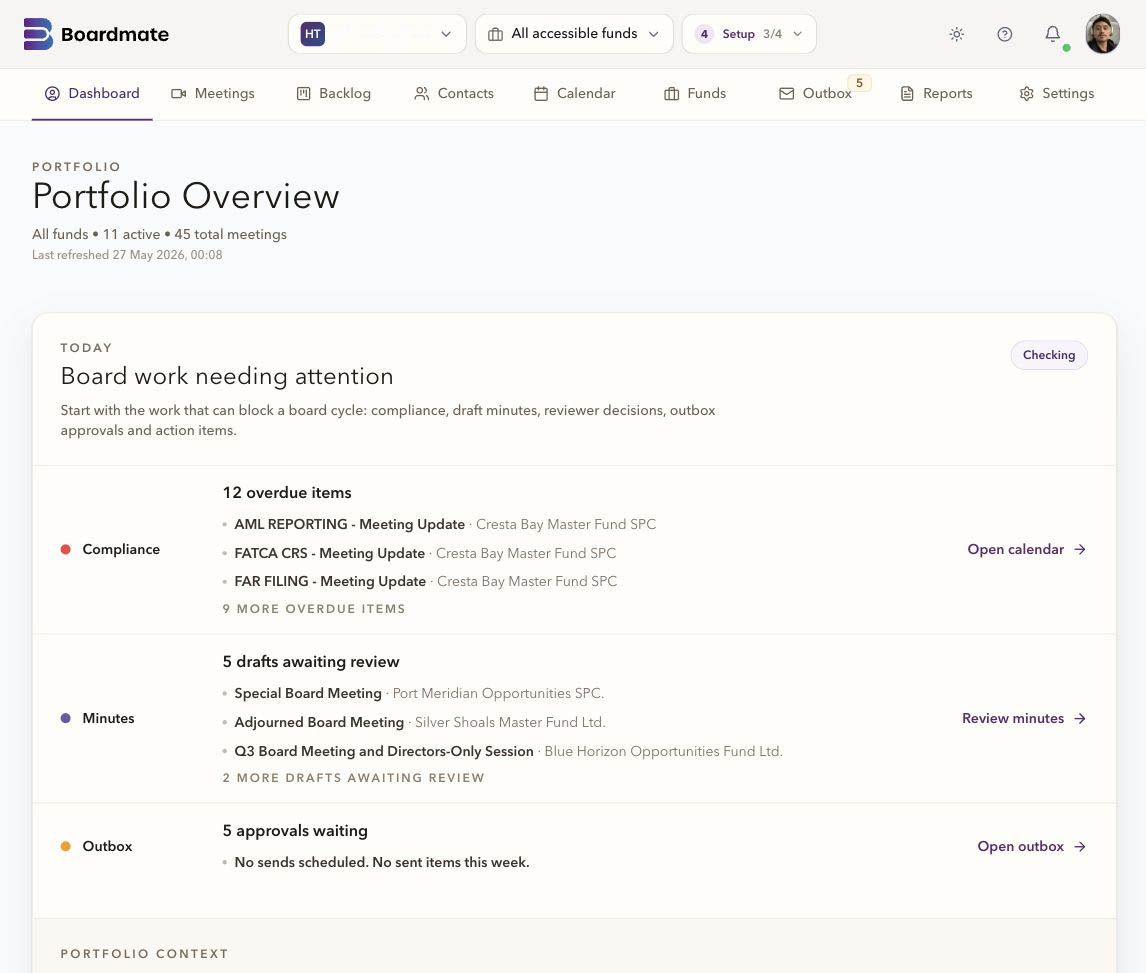
Accepted submissions, the selected pack contents and the PDF prepared for circulation stay connected to the meeting. The next cycle can start from a known record of the material, decisions and work still outstanding.
Boardmate helps a team avoid rediscovering previous wording, unresolved matters, and repeated governance patterns every time a new meeting begins.
Minutes are not finished if the commitments inside them disappear from the working cycle. Companion gives board support teams a place to carry actions, open points, and follow-up into the next agenda and board pack.
Named follow-up can remain visible for the next meeting where the approved minutes support it.
Recurring issues and carried-forward discussion points can be prepared before the next draft begins.
Director decisions and approval status can stay close to the documents and minutes they relate to.
Backlog clearance can create structured records that later support the live cycle in Boardmate Companion. The value is larger when approved minutes, actions, pack context, and annual task status become reusable operating context rather than archive material.
Historic meetings become clean Word and PDF outputs with review and export history.
Those records can inform agendas, report requests, board packs, annual tasks, approvals, and reminders.
The same continuity pattern can repeat across many funds, entities, reviewers, and directors.
Governance cycle
Source material becomes draft minutes, review history, chair decisions, exports, actions, and useful memory for the next meeting.
CSV, board packs, transcripts or recordings, support notes, separate reports, and reviewer details.
A formal house-style draft generated from the available source material.
Reviewer submissions, selected passages, uploads, and no-comment confirmations.
Accepted feedback and chair instructions shape the regenerated version.
Actions, audit history, approved wording, and continuity for future meetings.
Common questions
No. Reviewer comments are review input. The chair or delegated board support user decides which feedback shapes the next draft.
Yes. A first evaluation usually works best with several ordinary meetings, one complex meeting, one short or adjourned meeting, and prior minutes that show house style.
Lite is the backlog-clearing workbench. Companion is the broader board cycle workspace for agendas, report requests, board packs, annual compliance tasks, actions, approvals, reminders, and governance memory.